
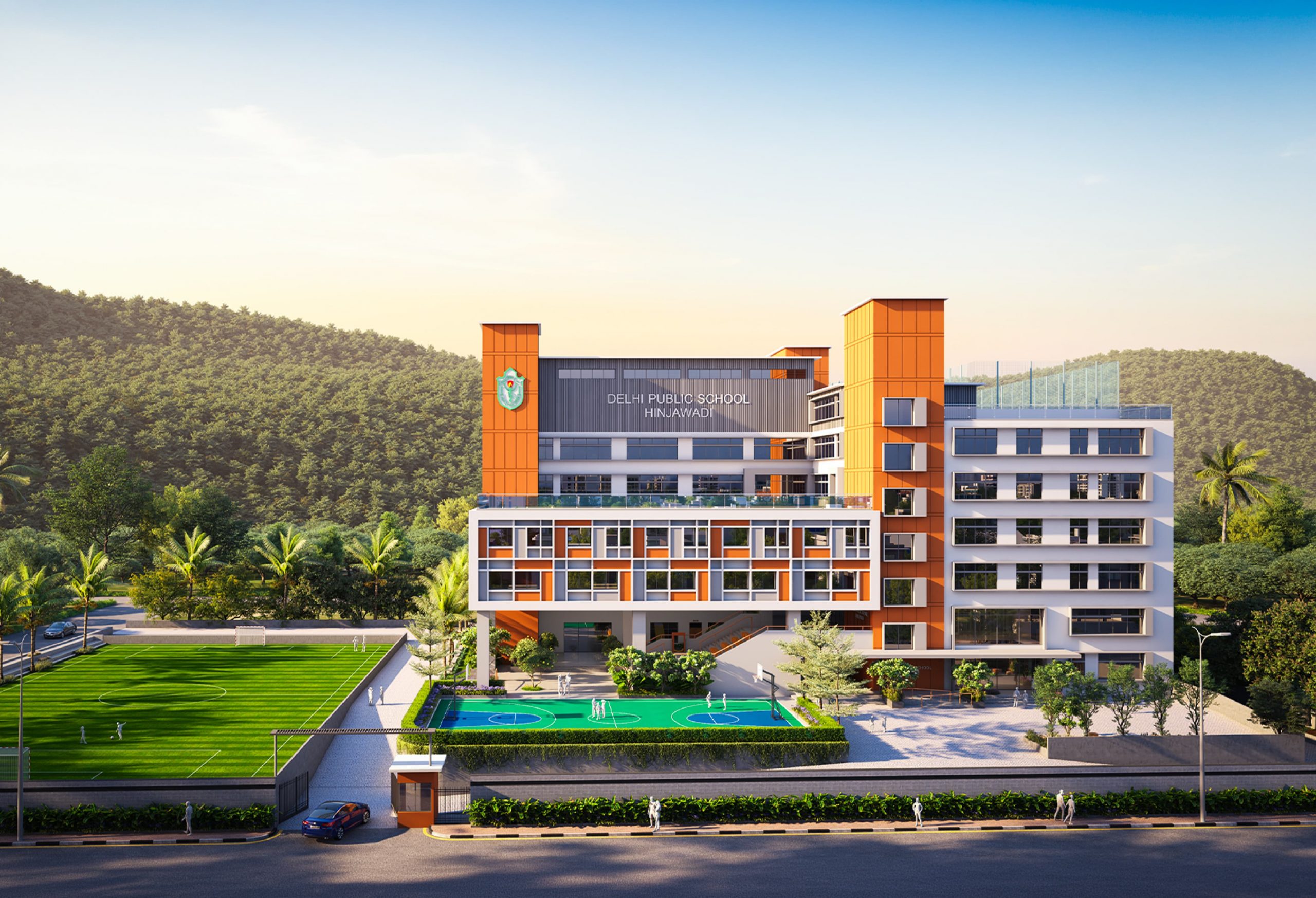
Parents searching for CBSE schools in Hinjewadi/ Hinjawadi will find plenty of familiar promises-academic excellence, holistic development, sports, technology and extracurricular activities.
At DPS Hinjawadi, we believe the more useful question is: What does all of this actually look like in a child’s everyday school life?
Does experiential learning mean an occasional annual field trip, or are children regularly taken beyond their textbooks? Does holistic development mean having a list of activities, or do students actually get dedicated time to pursue sports, arts, technology, communication and leadership?
At DPS Hinjawadi, many of these ideas are built into the school calendar and everyday learning practices. Here are some examples.
Learning Is Not Restricted to the Classroom
One of the school’s core principles is Relevance, children should be able to connect what they learn with the world around them.
This is visible in several ways.
Students participate in educational field visits connected to their age and curriculum. Recent experiences, for example, have included visits to a nursery and a post office for younger learners, while older students have had learning experiences connected with places such as the Pimpri Chinchwad Science Park & Planetarium and an Aviation Gallery.
The school also conducts Bagless Days through programmes such as Jigyasa for Grades 3-5 and Chetna for Grades 6-8. Instead of a conventional timetable built around textbooks and notebooks, these days are designed around experiences, activities, exploration and application.
This is what Relevance means at DPS Hinjawadi: children should be able to see why what they are learning matters.
Making Learning Visible-Literally
Parents usually see learning through marks and report cards. DPS Hinjawadi tries to make the learning process itself visible.
Through Making Learning Visible (MLV), students demonstrate what they have understood, created and developed rather than simply taking home a score.
And MLV is not restricted to academic subjects.
During the school’s Co-Curricular Showcase, parents have been invited to experience students’ work across clubs such as Wordsmiths, Eco Minions, Tech Titans, Abhivyakti, Nrityashakti, Rhyme & Rhythm, Brush & Beyond, Number Ninjas and Science Squad.
Parents therefore get an opportunity to see the learning behind the activity—the child’s thinking, participation, creativity and progress.
Students’ journeys are also captured through practices such as Darpan portfolios, providing another way to document growth beyond conventional examinations.
What does Data-Guided Learning mean at DPS Hinjawadi?
It means using evidence from a child’s learning, not assumptions to understand progress. Assessments, classroom observations, student work and reflections help teachers identify what has been understood, where support is needed and what the learner is ready for next.
That makes Data-Guided Learning a classroom practice rather than simply an educational term.
Reflection Is Part of the School Day
One particularly interesting aspect of the DPS Hinjawadi approach is that reflection is not reserved for the end of a term.
Practices such as Samurja at the beginning of the day and Closing the Loop at the end of learning sessions encourage students to think about their experiences, learning and progress.
This connects directly with one of the school’s 4 R’s-Reflection.
The four principles are:
- Relevance: Connecting learning with real life.
- Relationships: Creating an environment where students feel known, heard and supported.
- Rigour: Challenging learners to develop deeper understanding and mastery.
- Reflection: Encouraging children to think about their learning and improvement.
Rather than existing only in school literature, the aim is for these four ideas to appear in everyday experiences.
Sports Is Something Students Do, Not Just Something Schools List
For many parents comparing the best CBSE schools in Pune, sports infrastructure is an important consideration. But infrastructure alone doesn’t tell parents how often children actually play.
At DPS Hinjawadi, Tejas is the school’s structured sports programme.
Students can train in sports such as football, cricket, basketball, table tennis, chess, archery, skating and gymnastics, with defined groups and coaching.
Students also get opportunities to move beyond regular school sessions through selections and external competitions. Depending on the event and age category, opportunities extend across sports such as swimming, athletics, badminton, handball, netball, karate, rifle shooting and others.
The philosophy is straightforward: sport needs time, coaching, practice and opportunities to compete, not merely a place on the timetable.
The Same Applies to Co-Scholastic Learning
A similar approach can be seen outside sports.
Through clubs and other programmes, students explore areas including theatre, dance, music, art, technology, science, environmental awareness, mathematics, financial literacy and communication.
Students are also encouraged to participate beyond the campus.
For instance, the school has conducted internal selections for external opportunities such as Art Battle, while performing arts students participate in inter-school platforms covering music, dance and drama.
Drama itself can involve weekly sessions, school performances, productions, portfolios, peer feedback and student reflection rather than being limited to preparation for Annual Day.
This creates an important difference: participation becomes part of the learning journey rather than an isolated event.
Students Are Given Platforms to Find Their Strengths
Not every child needs to excel at the same thing.
One student may discover confidence through football. Another may find it while performing on stage. Someone else may enjoy coding, science, writing, chess, art or public speaking.
DPS Hinjawadi deliberately creates multiple platforms where these strengths can emerge.
Student leadership opportunities, club showcases, sports selections, competitions, performances and initiatives such as Voice of DPSH give students different ways to participate and be recognised.
That is an important part of being a holistic education CBSE school: success should not have only one definition.
How Does This Compare With a Conventional School Experience?
| Area | Conventional Approach | What Parents See at DPS Hinjawadi |
| Learning | Primarily classroom and textbook based | Classroom learning + field experiences + Bagless Days + hands-on activities |
| Assessment | Tests and report cards | Assessment plus learning evidence, reflection, MLV and portfolios |
| Parent visibility | PTMs and report cards | MLV showcases and opportunities to experience student learning |
| Sports | PE periods and annual competitions | Structured Tejas programme, coaching, selections and competitions |
| Co-scholastics | Activity periods | Dedicated clubs, showcases, performances and external opportunities |
| Student growth | Primarily academic performance | Academics, sports, arts, technology, communication and leadership |
| Reflection | Occasional | Practices such as Samurja and Closing the Loop |
What Parents Should Look for When Comparing Schools
Whether considering DPS Hinjawadi or other good CBSE schools in Pune, parents should look beyond brochures and infrastructure photographs.
During a school visit, ask:
- Can the school show me how learning happens beyond textbooks?
- How will teachers know if my child has genuinely understood a concept?
- How frequently does my child actually participate in sports and co-scholastic activities?
- Will I get to see my child’s learning journey beyond examination marks?
- What opportunities exist for my child to perform, compete, lead, create and explore?
- Does the school’s stated philosophy appear in its actual calendar and everyday practices?
These questions can tell parents much more than a list of facilities.
So, What Makes DPS Hinjawadi Different?
It isn’t one programme, one facility or one event.
It is the attempt to connect the different parts of a child’s school experience.
A concept learnt in class may lead to an experiment or field experience. Learning may later become visible through an MLV presentation or portfolio. A child’s interest may find another outlet through a club. Sporting ability may develop through Tejas and progress to competition. Students are encouraged to reflect on these experiences rather than simply move from one activity to the next.
That is what Data-Guided Learning and the 4 R’s-Relevance, Relationships, Rigour and Reflection, look like when translated into school life.
For parents exploring top CBSE schools in Pune, that is perhaps the most important comparison to make:
Don’t only ask what a school offers. Ask what your child will actually get to do. If you are considering the next academic session, you can also learn more about DPS Hinjawadi admission 2027-28 and take the next step towards your child’s educational journey.